
Creative Strategy
+ Marketing Performance
A lot of creative strategy happens long before anything gets designed.
My days usually involve some combination of:
Writing creative briefs and campaign concepts
Building paid social testing plans
Analyzing customer reviews and competitor ads
Developing messaging angles and creative hooks
Partnering with growth and retention teams
Leading designers and reviewing creative
Creating static ad concepts and performance creative
Building AI powered creative workflows
Scaling winning concepts into multiple variations
Using AI to explore ideas faster and increase creative output
Some days I'm building the plan.
Some days I'm building the ad.
Most days, it's both.
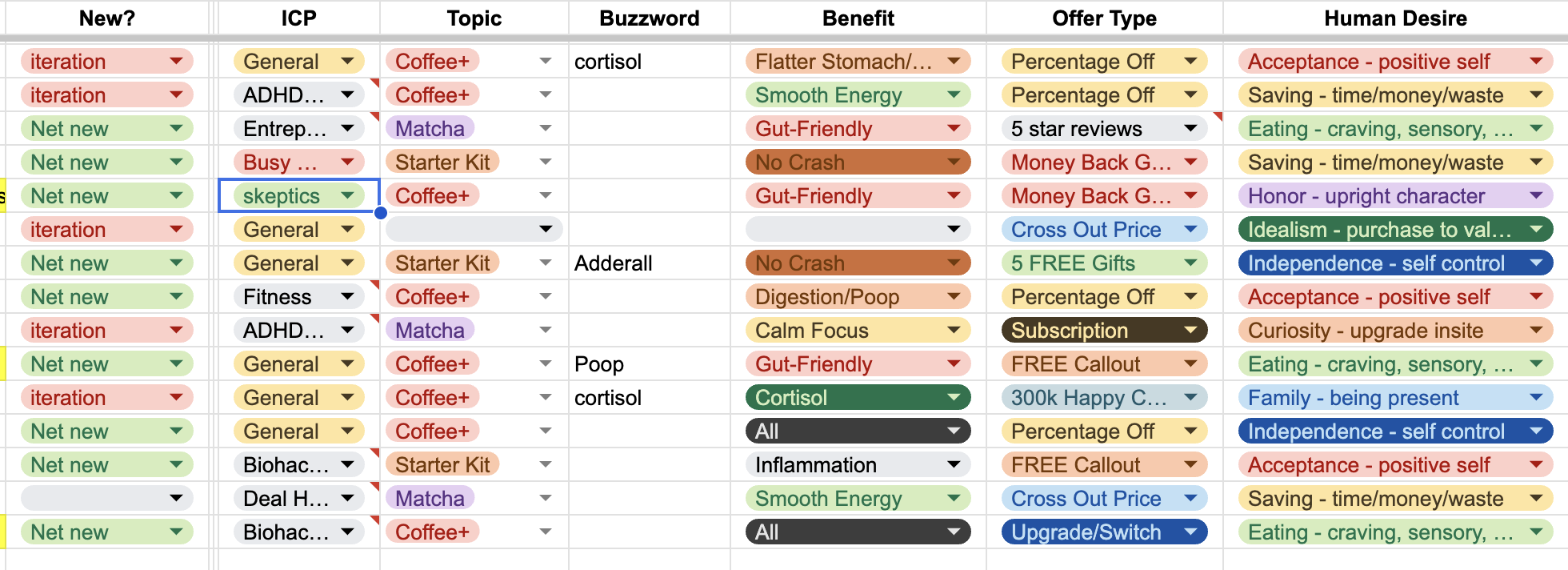
Creative Testing Framework
One of the fastest ways for creative teams to get stuck is recycling the same ideas over and over.
I built this framework to track which angles, formats, audiences, and offers we've already tested so we can generate new concepts without guessing to make sure we’re not just remixing the same safe ideas every week. It tracks which angles we’ve hit, who they’re for, what benefit we’re pushing, and how we’re delivering it (copy, buzzwords, offers, emotional levers). Most ads come from smart iterations, but when we need something weird, new, or disruptive, I use a custom-built randomizer in Google Sheets to spit out unexpected combos I feed into AI to generate fresh on-image copy and new directions. It keeps our queue varied, keeps our ideas sharp, and keeps us from falling into “just ship more content” mode.
Want to see what happens when you combine “gut-friendly” with “skeptics” and “money-back guarantee”? Because I’ve tested it.
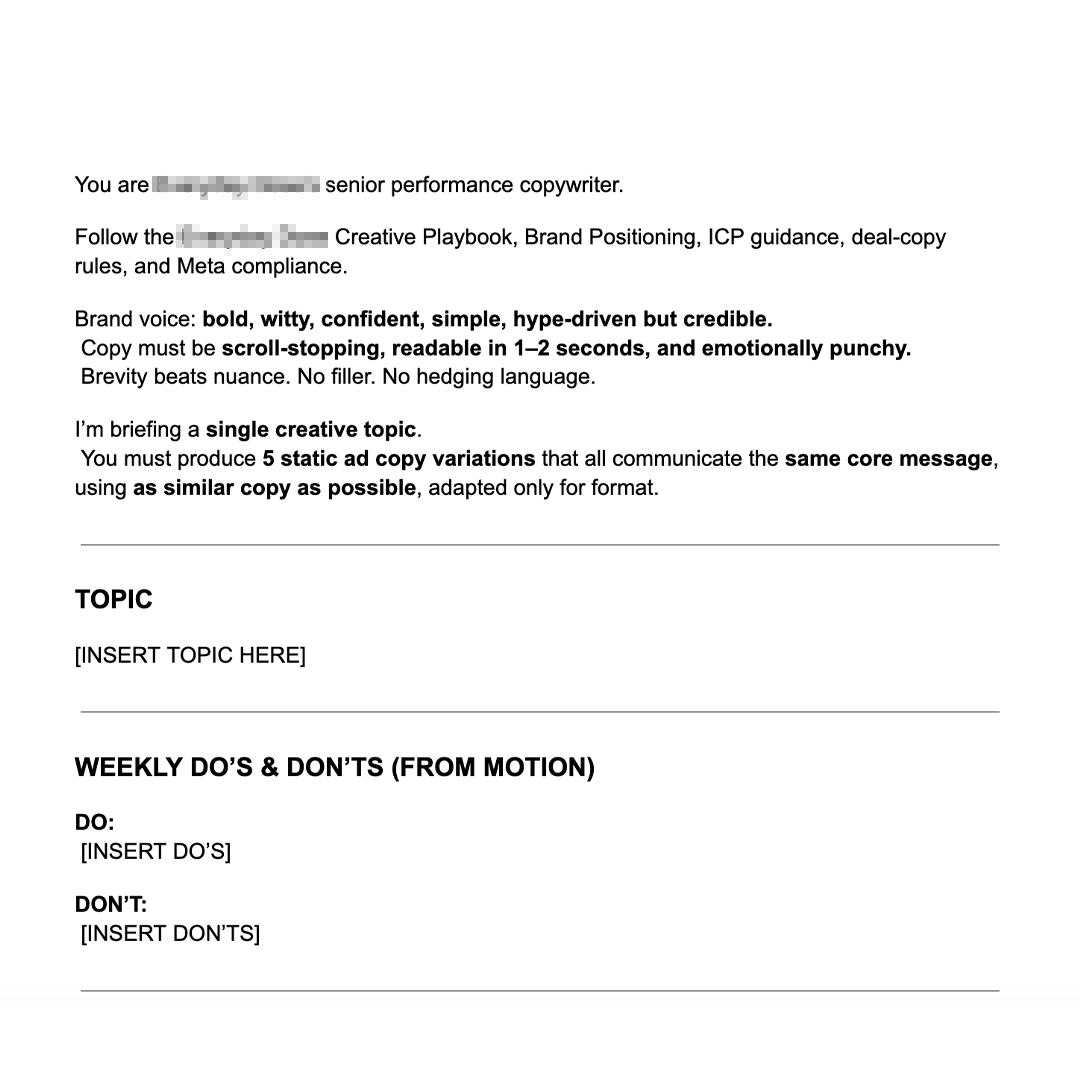
Creative Brief System
I built an AI briefing prompt that I plug into each week. It’s a reusable, copy/paste setup where I drop in the topic, ICP, angle, and performance notes from Motion (like “Cortisol is outperforming ‘stress’” or “Shorter headlines > long storytelling this week”). Then I ask the AI to generate ad copy across different formats like:
A punchy Us vs. Them comparison
A native-feeling Instagram Story version
A polished editorial-style carousel
A customer testimonial
A social proof ad (think: “300,000+ happy customers”)
This gets me high-volume ideation fast, but still tied to what we know is working. It also makes sure we're hitting the same winning angle across multiple design styles, which keeps our friend Andromeda happy (and gets us real learnings we can scale). Used to generate paid social concepts, headline variations, static ads, testing plans, and campaign directions.

Creative Review & Optimization
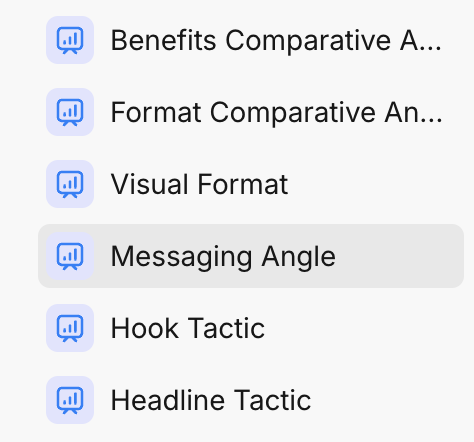
I don’t just check what’s performing, I break it down by why. Every ad gets tagged by angle, format, ICP, and more with supporting AI tags layered in from tools like Motion. I build weekly creative reports in Motion that track which combos are landing (e.g. “visual testimonials + cortisol + skeptical ICP”) and which need to die. That way, we’re not guessing. We’re not relying on vibes. And we’re not wasting brain power trying to remember what worked. We’ve got the data to prove it and the system to build from it.
If we’re scaling creative, I want to know exactly what we’re scaling not just “the one that kinda looked cool.”
…And I still find time to design
Not everything gets the AI treatment, some ads are still precious, and I design those myself. But for high-volume, everyday BAU creative? I’ve built systems that let me move fast without sacrificing quality.
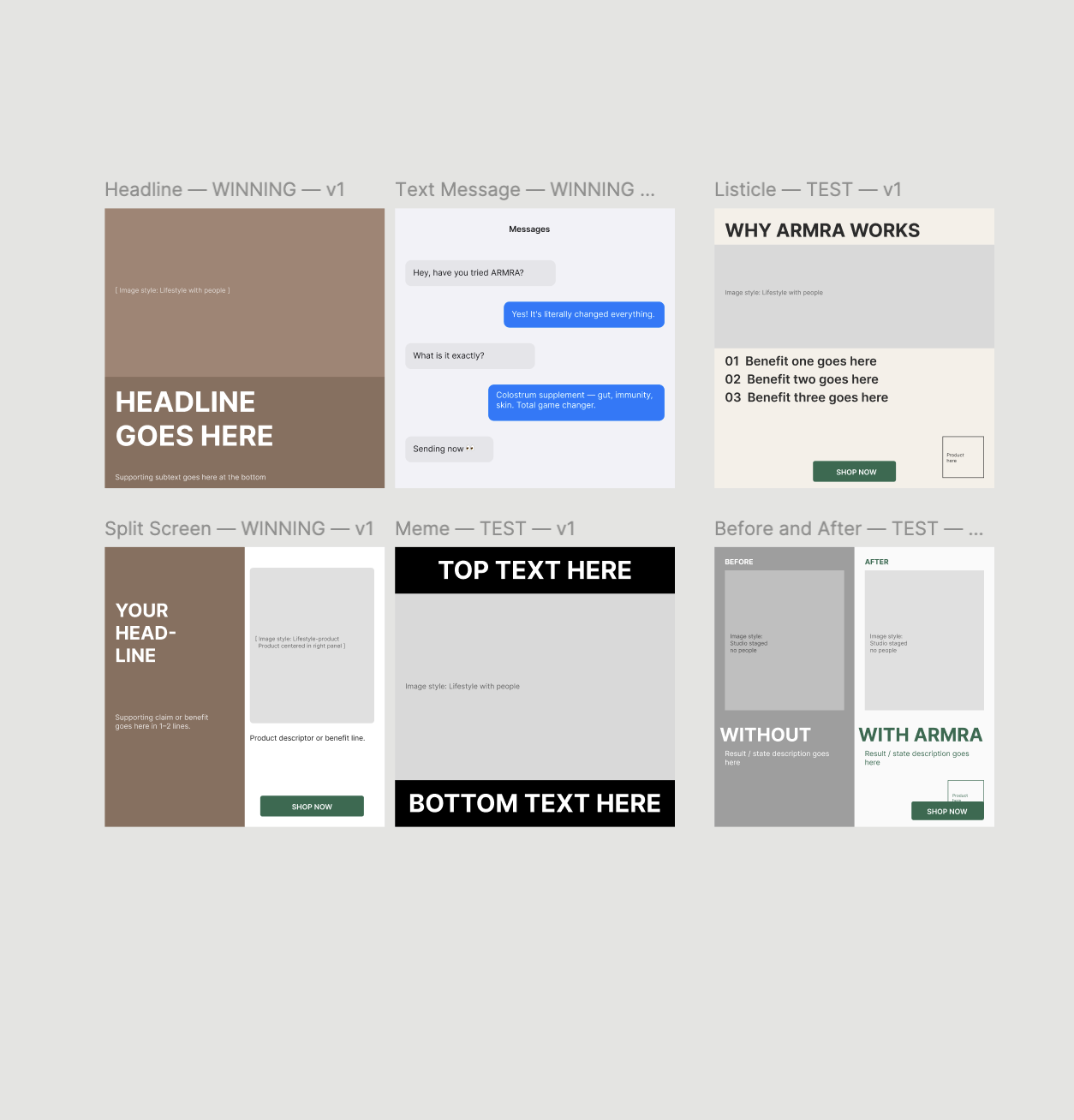
Non-Ai related, I’ve made over 100 Figma templates that can be grab-and-go. The team can just swap the image, tweak the color, drop in new copy, and go live. I also track what formats are hitting and work the hell out of them until they stop pulling. That alone saves hours.
Lately I’ve been using tools like HoloAI, which pumps out ~80 static ad variations a day. Are they perfect? No. Maybe 50% are usable. But the magic is that I can break the ads into layers, pull them into Figma or Photoshop, and refine from there. It’s not about replacing creative, it’s about not always starting from zero. They also let you translate to Spanish which is super fun.
For anything copy-led or fast-turnaround, Ai a game-changer. I get time back, and the work still works.
AI Creative Workflows
One Claude agent I've been building basically acts like a second set of eyes on our creative.
It reviews winning ads from Motion and points out design directions we haven't explored yet.
Most teams are pretty good at changing the obvious stuff. New images. New headlines. New offers.
But the underlying structure often stays exactly the same.
This helps me find opportunities in the layout itself: hierarchy, spacing, grids, CTA placement, composition, and all the little decisions that influence performance.
The biggest benefit is that I spend less time wondering what to make and more time testing ideas that actually have a reason to exist.
It doesn't stop at recommendations, either. The workflow can generate the first pass of the layout directly in Figma, giving me a starting point to iterate from. Instead of opening a blank file, I'm opening a draft that already reflects patterns from winning creative.
It's also become a fast way to generate new template directions. Some are dead ends. Some turn into formats we use repeatedly. Either way, it helps me explore more territory without starting from scratch every time.
Most teams iterate on content.
I'm interested in iterating on structure.